Deep Green Press Kit
Updated for version 2.1.2, October 2026
Contents
- Deep Green
- Quick facts
- The story
- Why another chess app?
- What’s new in the 2.1 releases
- Feature highlights
- Screenshots and video
- Logos and artwork
- Boilerplate
- About the developer
- Quotes
- Press coverage
- FAQ
- Contact
Deep Green
A no-nonsense classical chess app for iPhone and iPad.
Deep Green is a native chess app focused on one thing: playing chess. No ads, no accounts, no distractions. It combines a clean interface, beautiful custom pieces, open PGN and FEN support, and an original chess engine first written for the Apple Newton in 1998.
Quick facts
| Developer | Joachim Bondo |
| Platforms | iPhone, iPhone Duo, and iPad |
| Price | Free – no ads, no in-app purchases |
| Category | Board Games |
| Engine | “Steampunk,” original engine from 1998 |
| Languages | English (US and UK), German, Danish |
| Requirements | iOS/iPadOS 16.4 or later – iPhone Duo support requires iOS 27.1 |
| Privacy | No tracking, no analytics – App Store label: “Data Not Collected” (privacy policy) |
| Formats | PGN and FEN, plus board images |
| Website | https://deepgreen.app |
The story
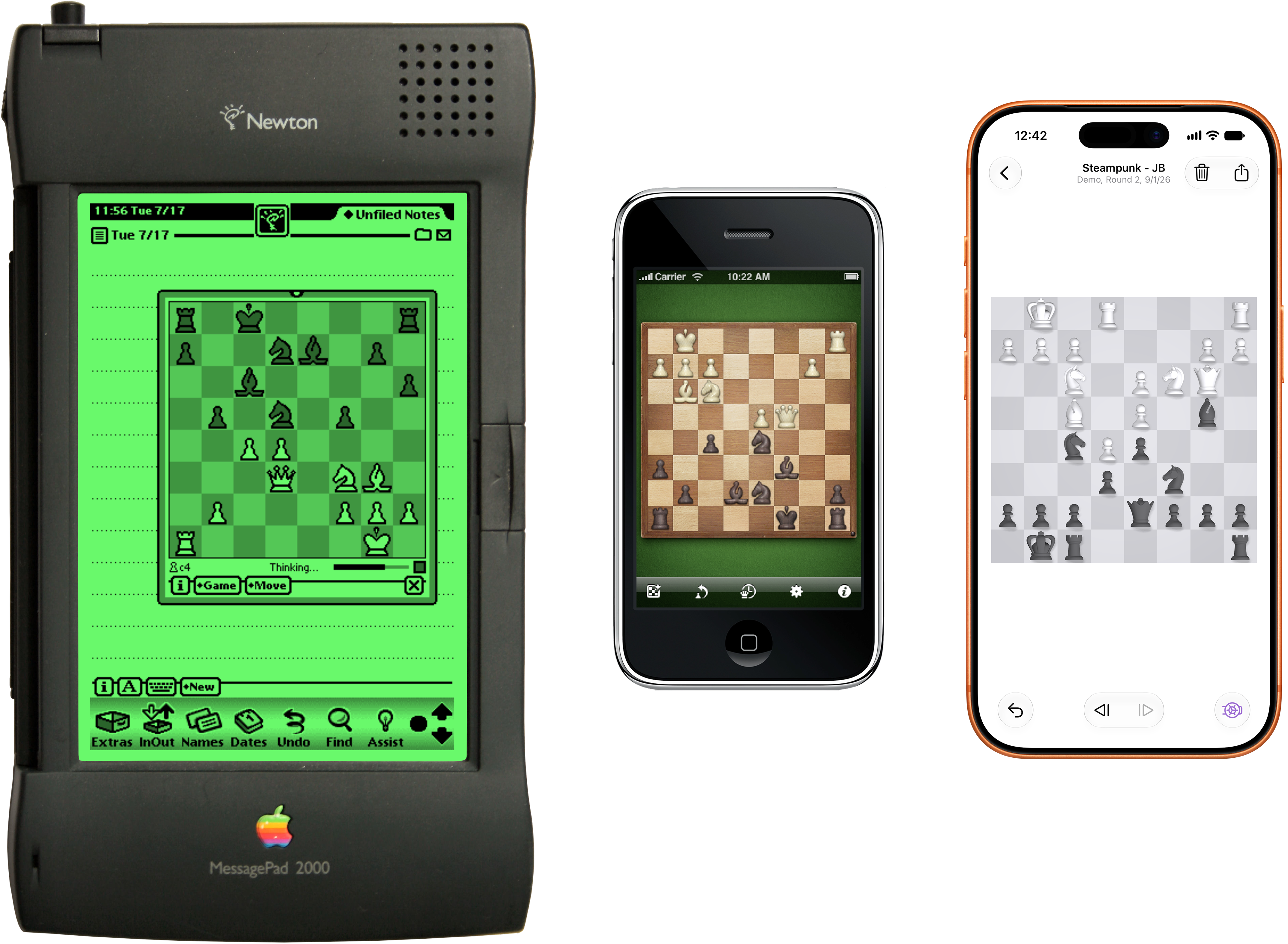
Deep Green began on Apple’s Newton platform. In early 1998, Joachim Bondo gave the first public sneak peek of his chess app at a Newton user group in San Francisco. Ten days later, Steve Jobs cancelled the entire Newton platform.
Deep Green shipped anyway. At the time, there was exactly one other chess app for the Newton – written entirely in NewtonScript, and slow, big, and clumsy for it. Deep Green’s engine, Steampunk, was written in C++: fast and lean, wrapped in a native NewtonScript interface.
Ten years later, in December 2008 – five months after the App Store opened – Deep Green arrived on iPhone. The chess landscape had changed: this time there were more than 240 chess-related apps. Deep Green still stood out, and John Gruber of Daring Fireball covered its first three versions.
After version 1.2.3 in 2016, the app went quiet for several years. In 2023 it returned as version 2.0, rewritten from scratch in Swift. The philosophy never changed: playing chess should feel calm, elegant, and enjoyable – not competitive or addictive.
| Year | Event |
|---|---|
| 1998 | Deep Green and its engine are created for the Apple Newton |
| 2008 | iPhone release, five months after the App Store opens |
| 2016 | Version 1.2.3, the last release before a long pause |
| 2023 | Version 2.0 – a complete rewrite in Swift |
| 2025 | Modern iOS updates: refreshed icons, sharing, and refinements |
| 2026 | Version 2.1 – Liquid Glass, full iPad citizenship, Quick Look; 2.1.2 adds iPhone Duo |
Why another chess app?
Modern chess apps optimize for engagement: accounts, subscriptions, tournaments, ratings, streaks. Deep Green takes a different approach. It is made for people who want to sit down, play a thoughtful game of chess – on the train, in a café, in bed – maybe save it in an open format, and move on with their day.
Native first
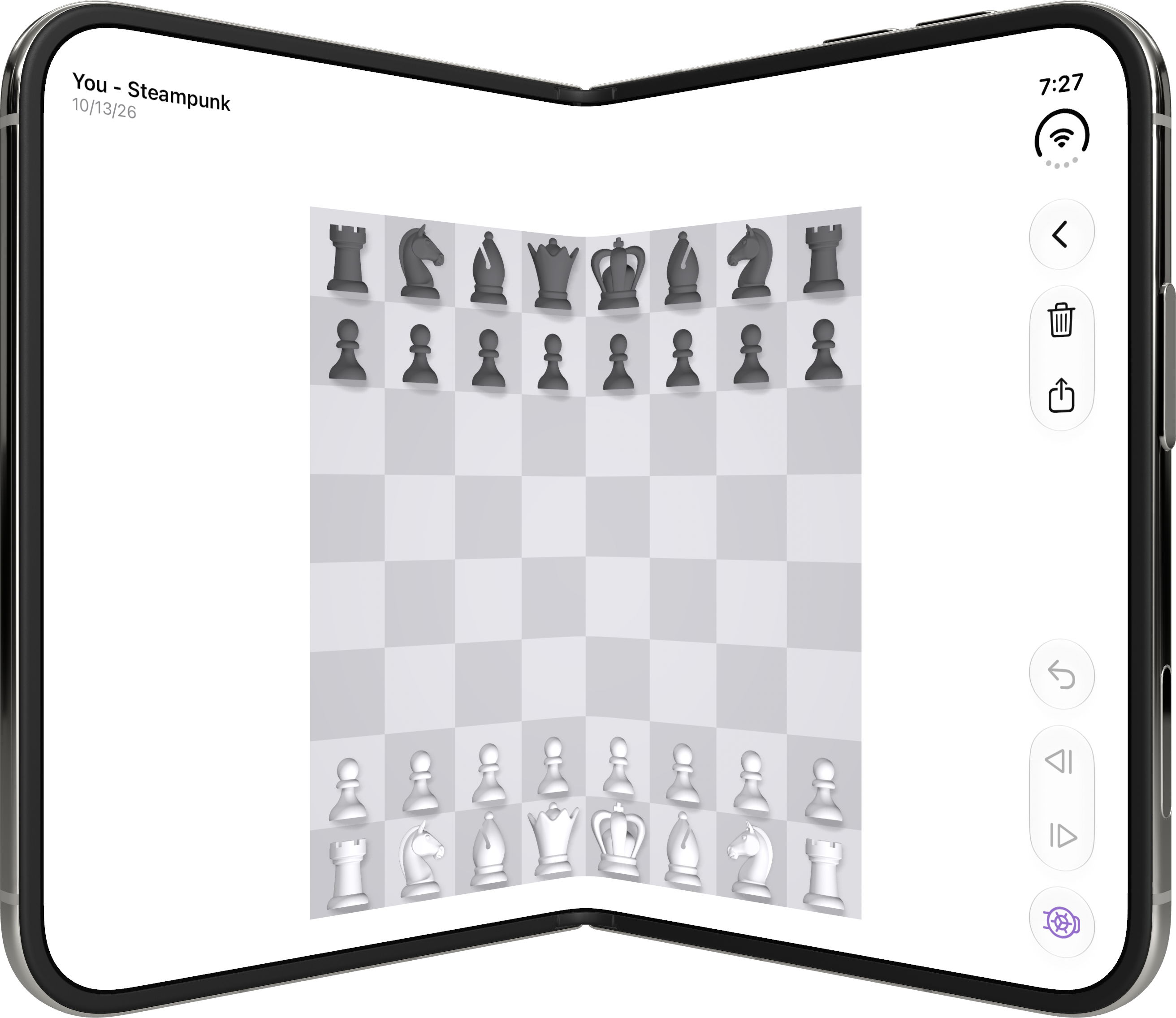
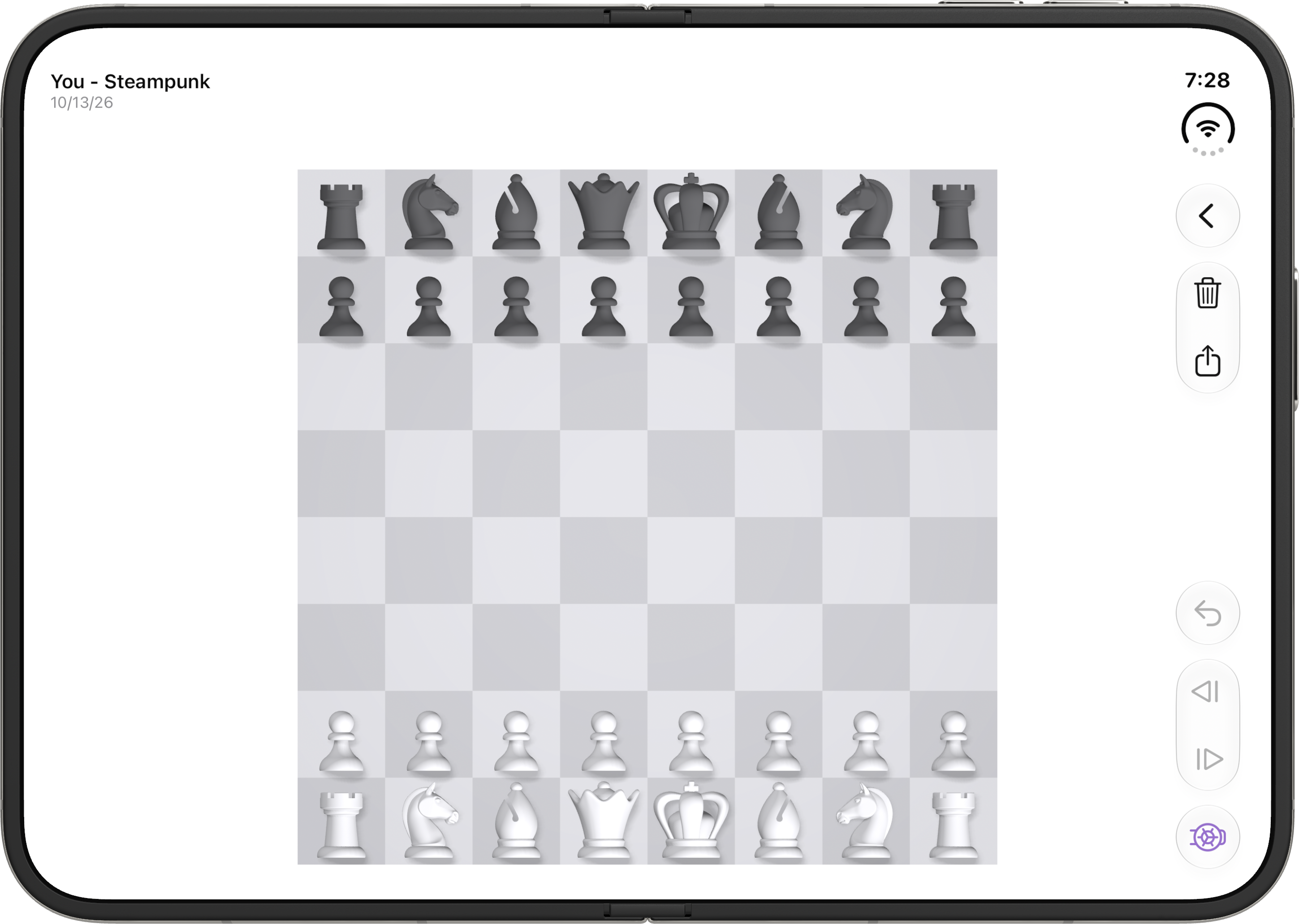
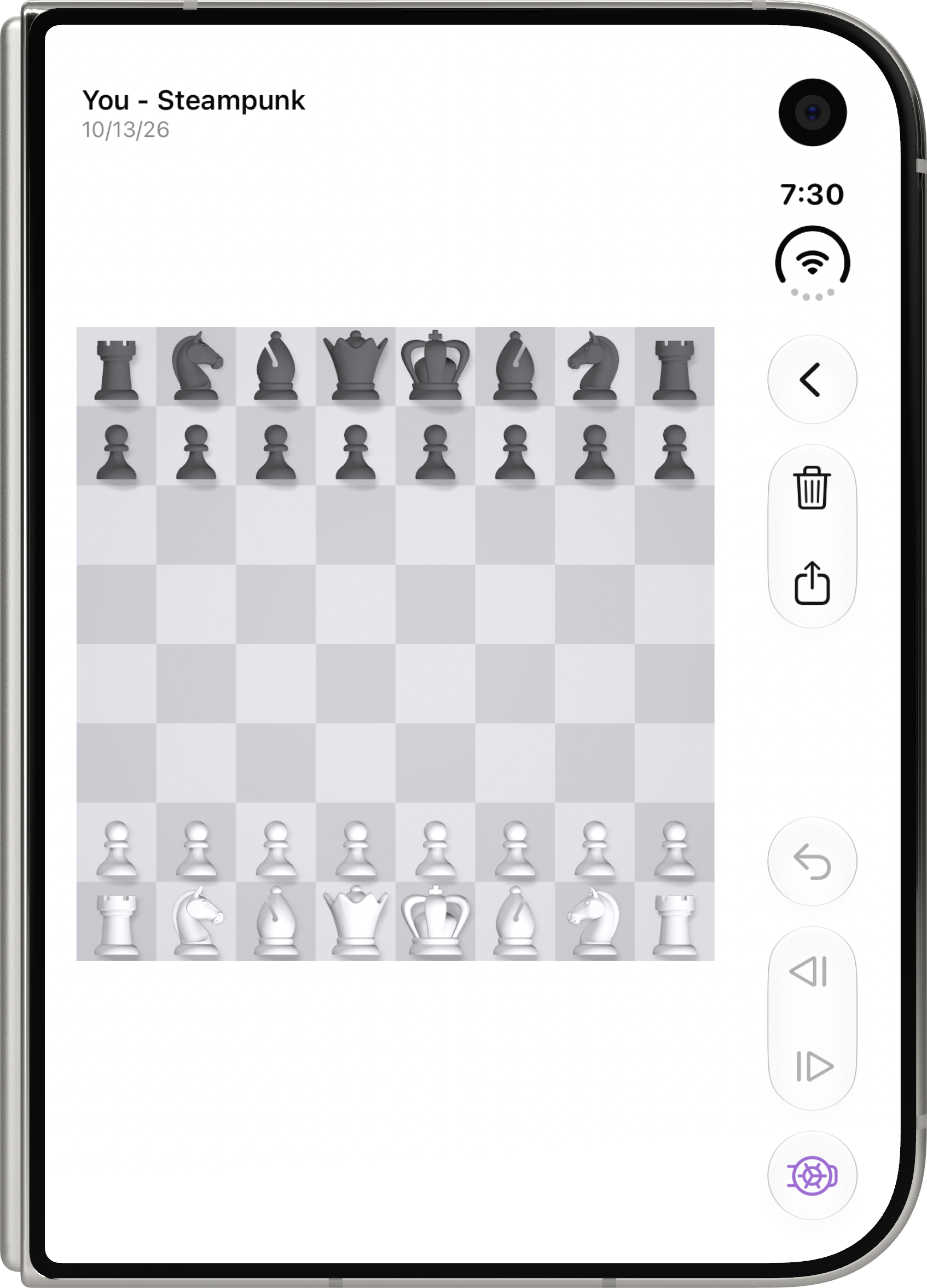
Deep Green embraces Apple’s platform conventions instead of reinventing them: share sheets, context menus, undo and redo, Dark Mode, Dynamic Type, drag and drop, and full Files integration. On iPhone Duo, the board follows the fold and the game controls follow the system into the vertical bar. It feels like an Apple app first, and a chess app second.
A humane opponent
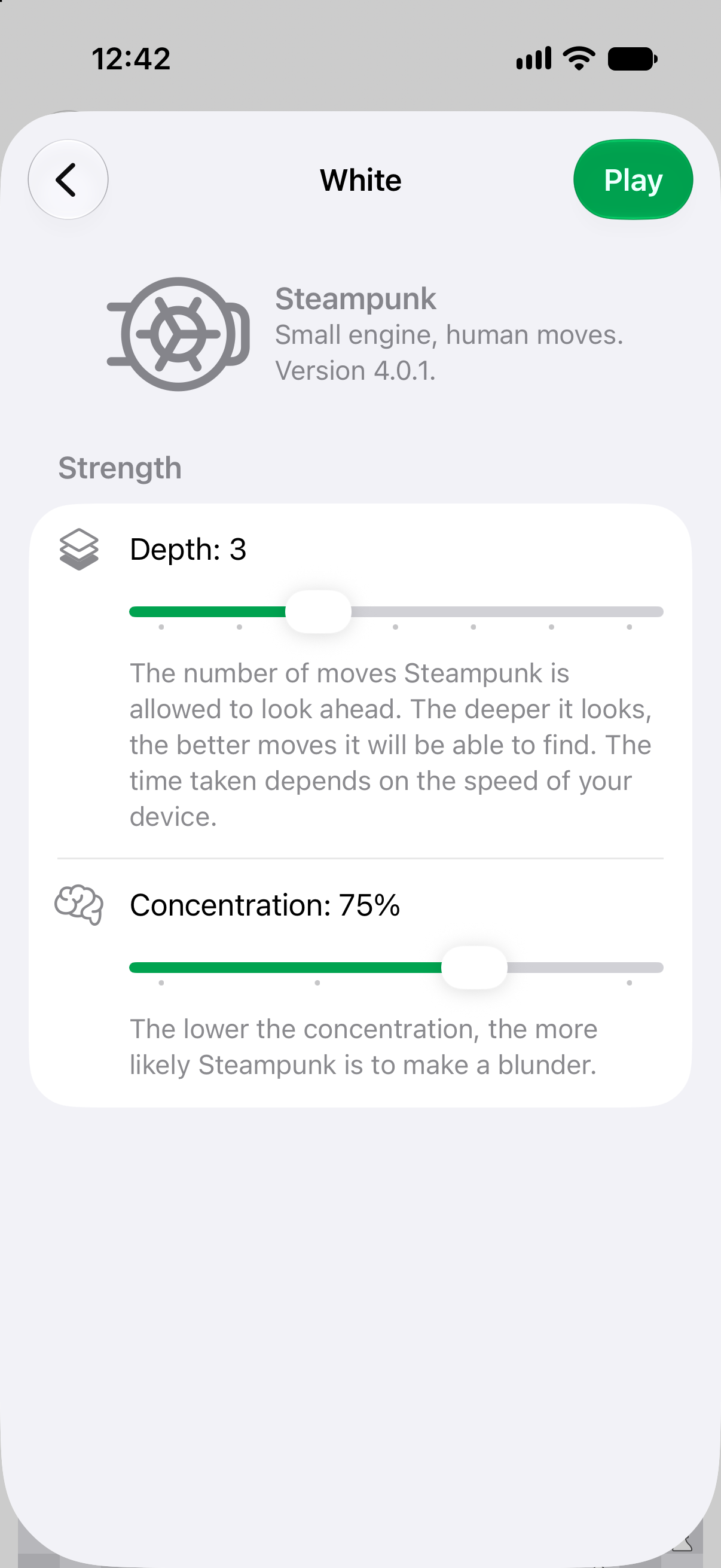
The built-in engine, Steampunk, is not trying to be Stockfish. It was written for the Newton in 1998 and is designed to be enjoyable to play against. Even at low settings it consistently beats most casual players. Lower its concentration, though, and it starts making human-like mistakes, giving the rest of us a chance to win from time to time.
Human touches
The same care runs through the whole app:
- A clean, quiet interface. (Search the App Store for “chess” and compare.)
- No move notation littering the screen. Where other apps print lines of cryptic text below the board (“Nbd2+!”), Deep Green tucks moves into menus, shown with piece symbols and their destination squares.
- No cryptic engine parameters; just depth and concentration.
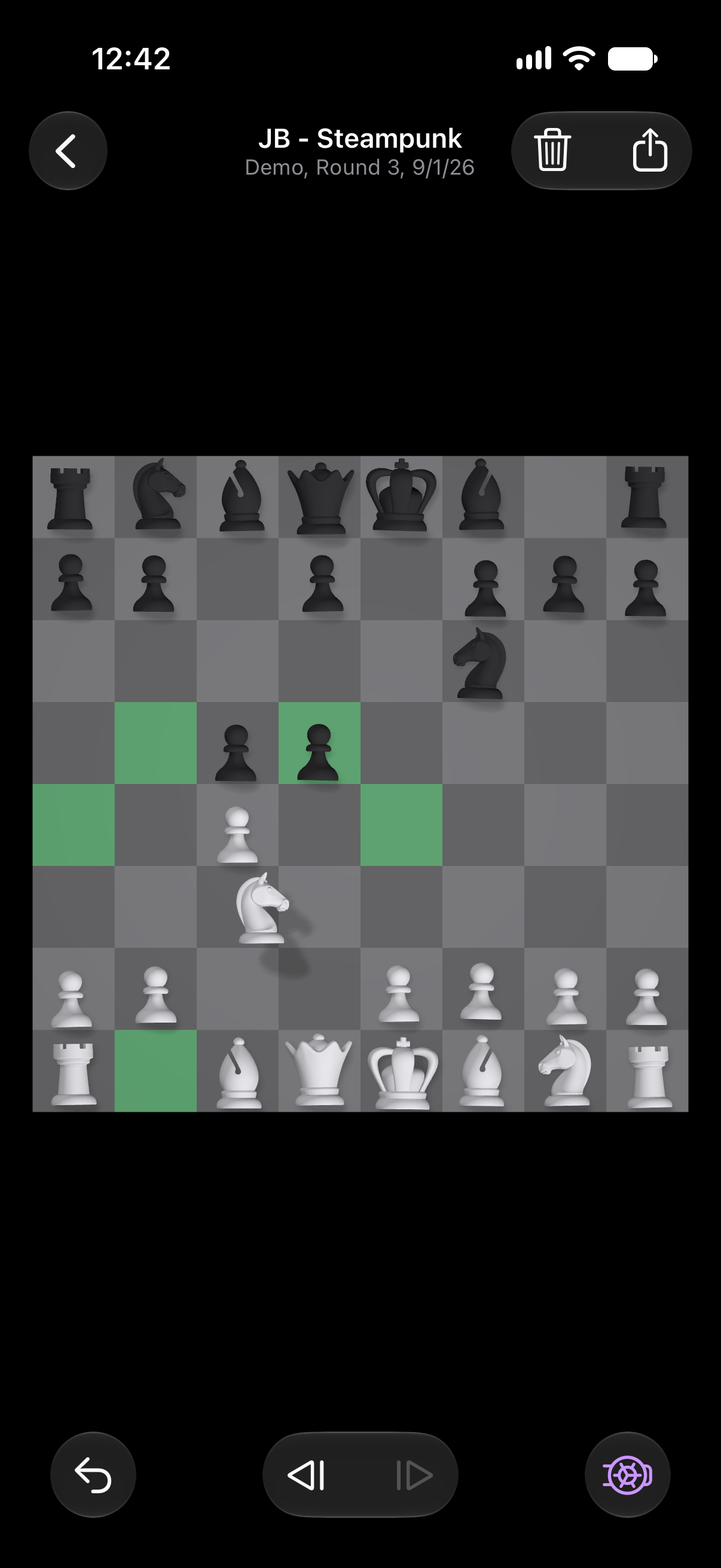
- Pieces sit slightly off-center on their squares, like in real life, and knights can turn to face the center of the board. (Both are optional and can be turned off in Settings.)
No business model gymnastics
- No ads
- No tracking
- No analytics
- No subscriptions
- No account required
What’s new in the 2.1 releases
Version 2.1 shipped in August 2026, followed by 2.1.1 in September and 2.1.2 in October. The highlights, newest first:
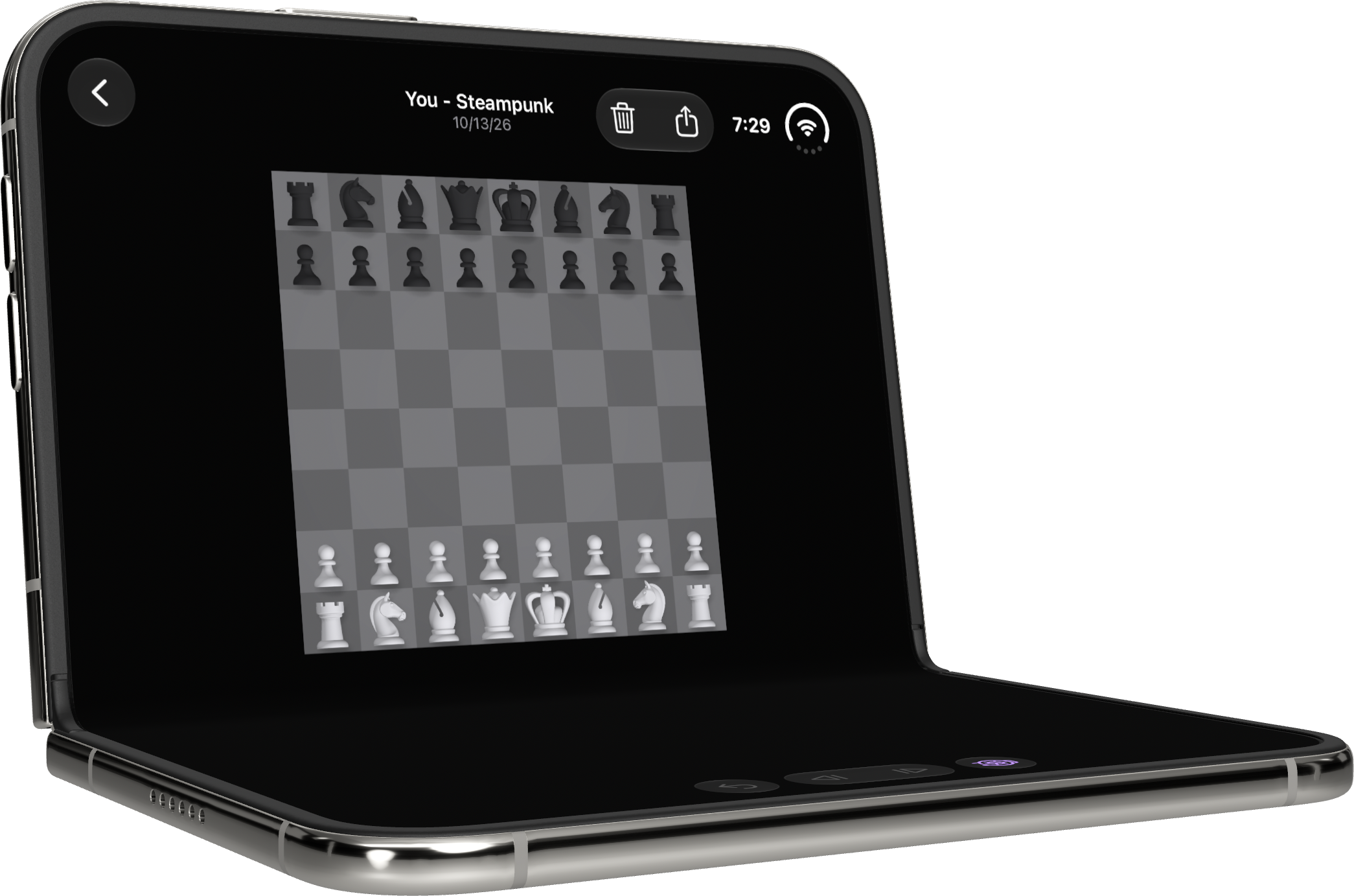
- Made for iPhone Duo. Deep Green adapts to both displays and every pose. In book pose the board centers on the fold – like a folding chess board – in laptop pose it keeps to the upper half, and open flat it spans the fold. The game controls follow the system into the vertical bar.
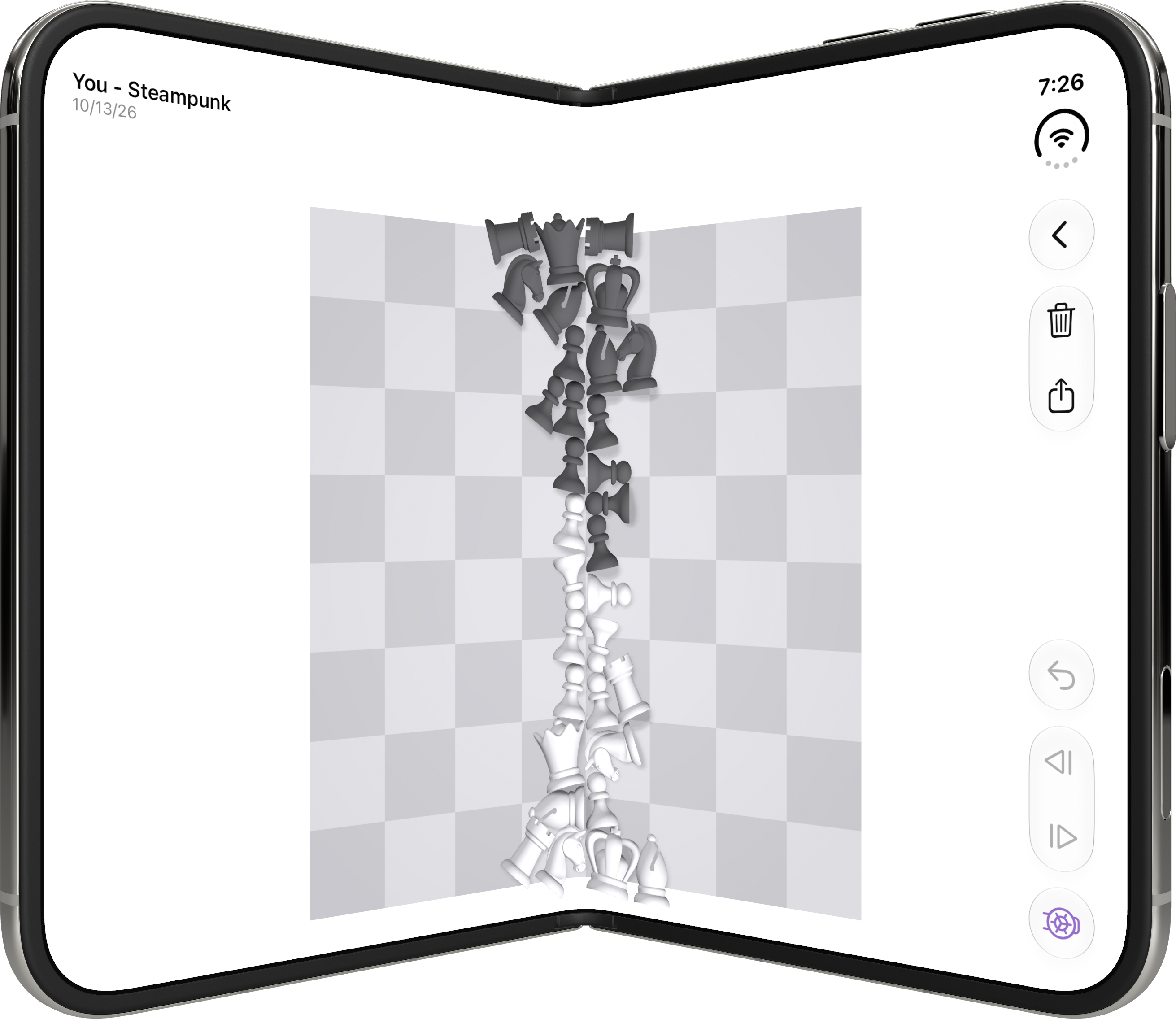
- Pieces slide into the fold. Start closing the Duo in book pose, and the pieces slide toward the fold, the way they do on a real folding board. Open it again, and they spring back to their squares.
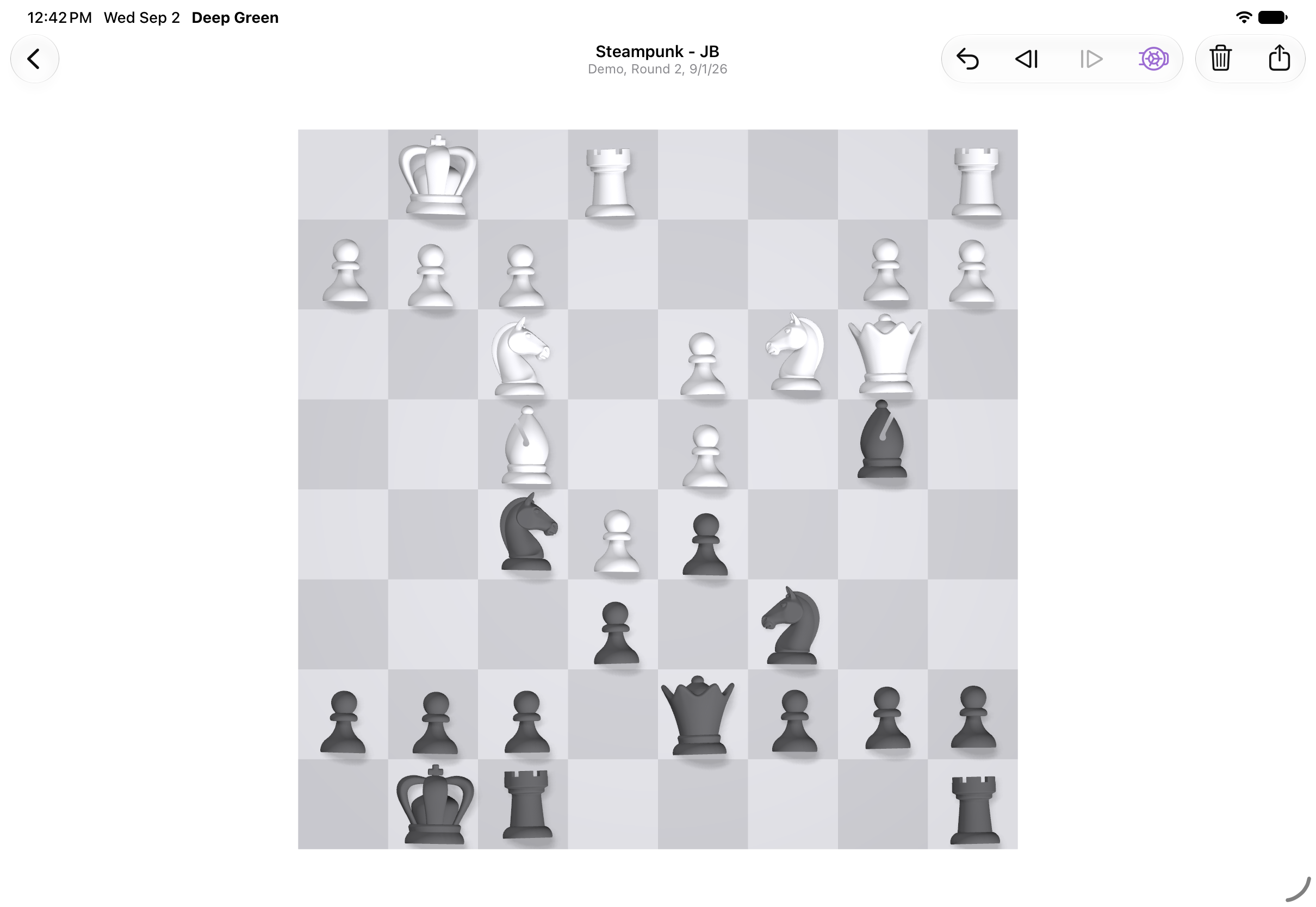
- Room for the board. The board takes all the space the bars leave it, stays centered, and fills the screen when the bars are hidden. On iPad in portrait, the game controls move to a bottom toolbar, centered within reach of either thumb.
- Redo. Press and hold Undo to redo the move you just took back, and take back the move that ended a game while it is still open.
- Liquid Glass. The app adopts Apple’s new design language on iOS 26 and later, with a new app icon.
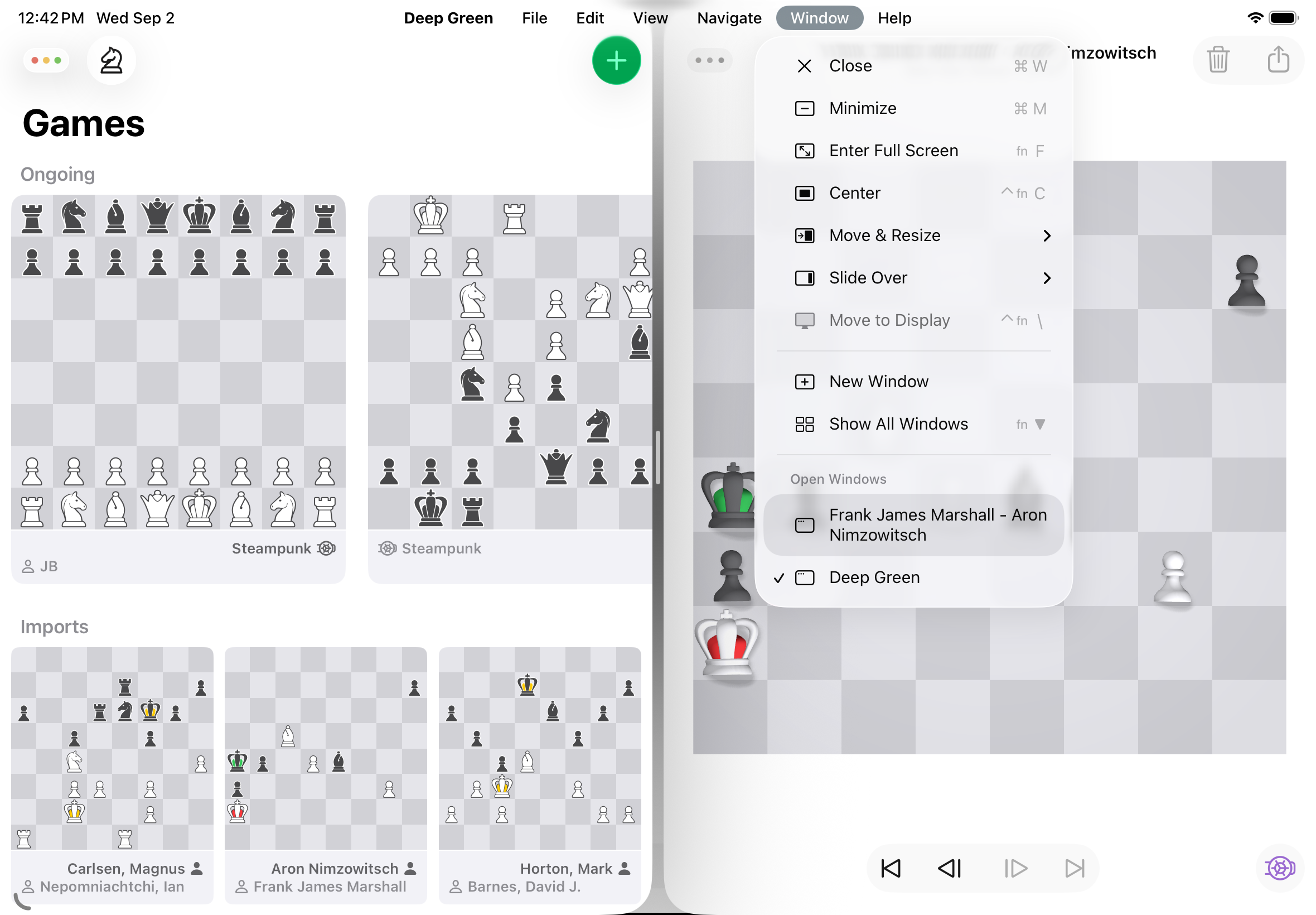
- A real iPad citizen. Deep Green gets its own menu bar, supports multiple windows – open a game in its own window, kept in sync – and full keyboard navigation.
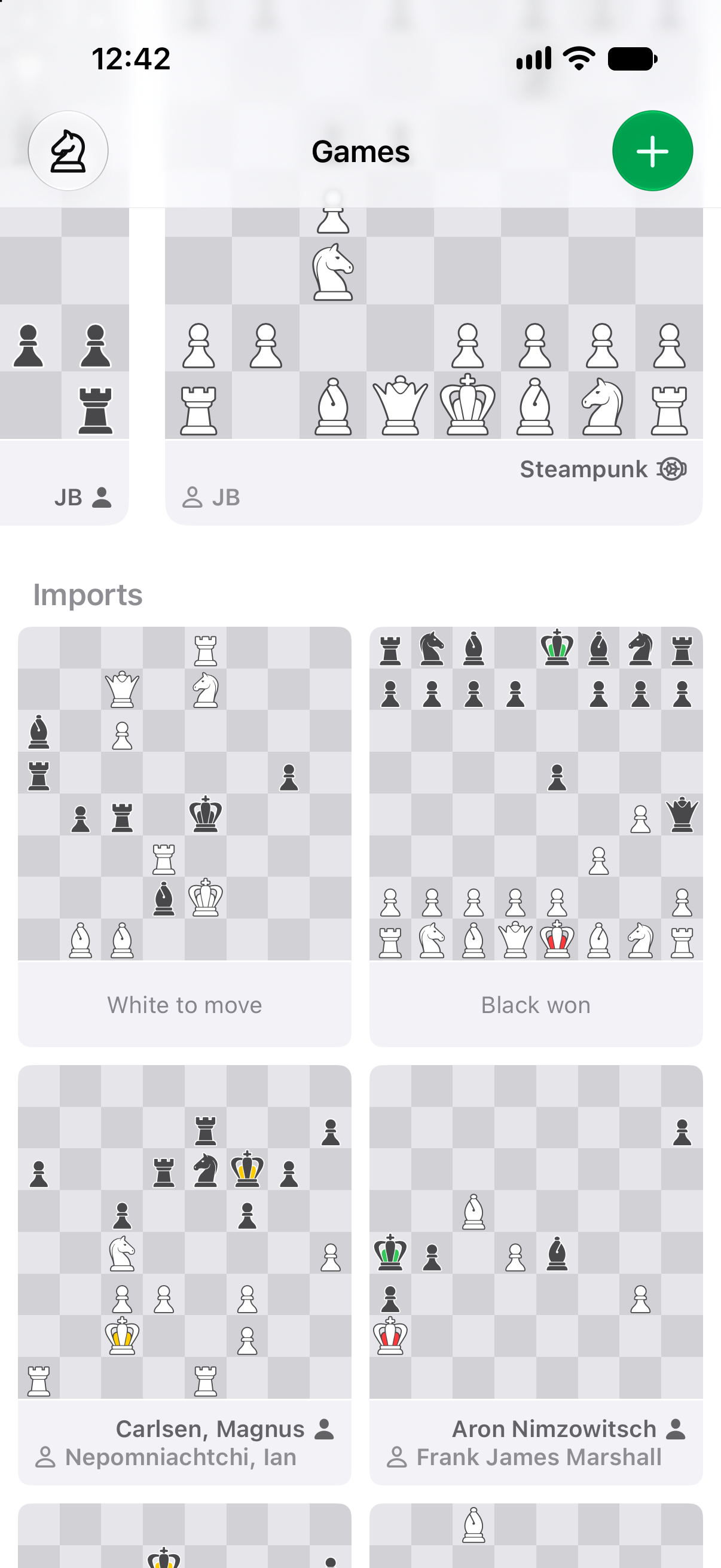
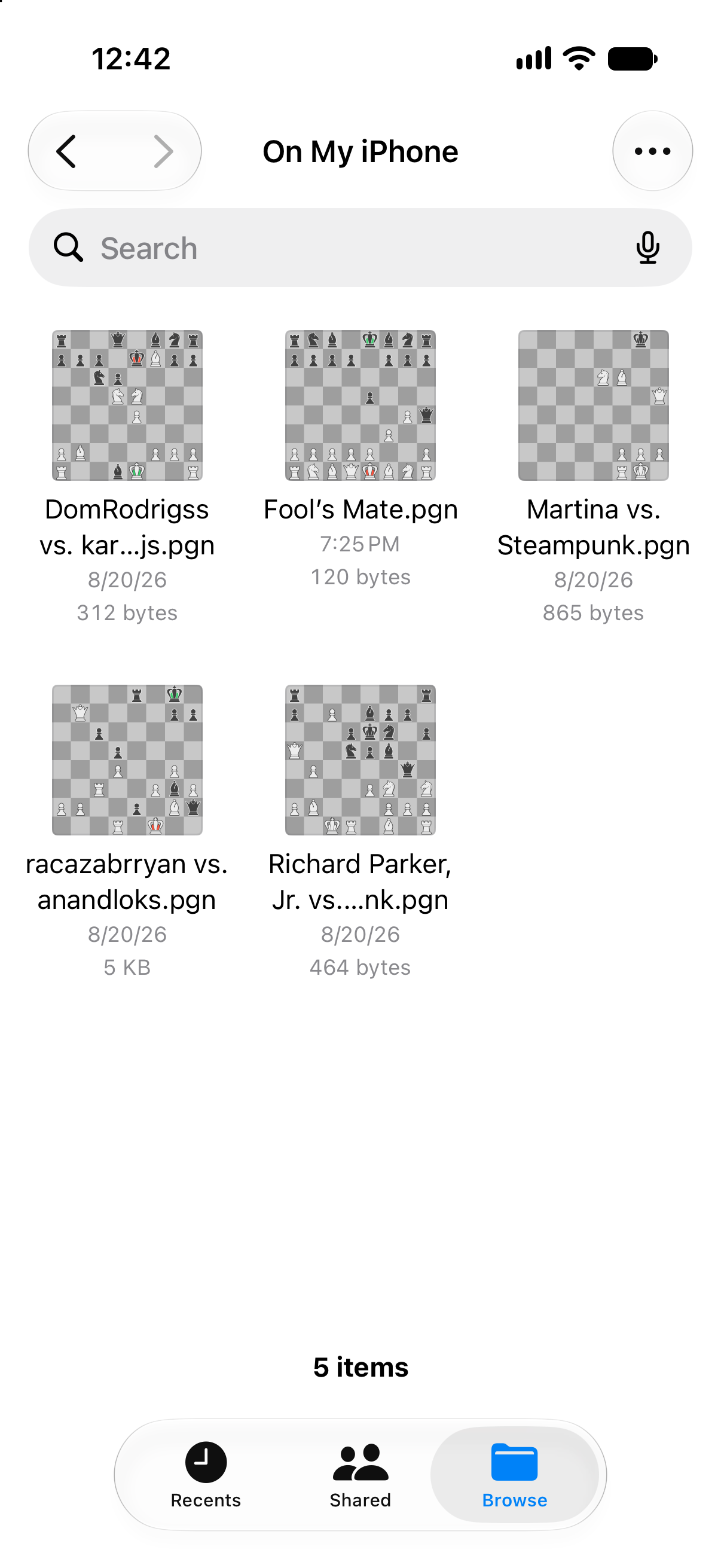
- Chess files are real documents. Import PGN and FEN files from the Files app, by drag and drop, or via AirDrop – and save or drag games out again, into Notes or anywhere else. Quick Look previews and thumbnails show the actual position, drawn in Deep Green’s own board style.
- The board as a picture. Share any position as an image – save it to Photos, or send it to Messages, social media, or any other app that takes images. Images are named after the game and carry players, event, date, and the complete game with them.
- A transition you can grab. Opening a game zooms the board out of its cell; you can drag, reverse, and pinch it closed mid-flight, Photos-style.
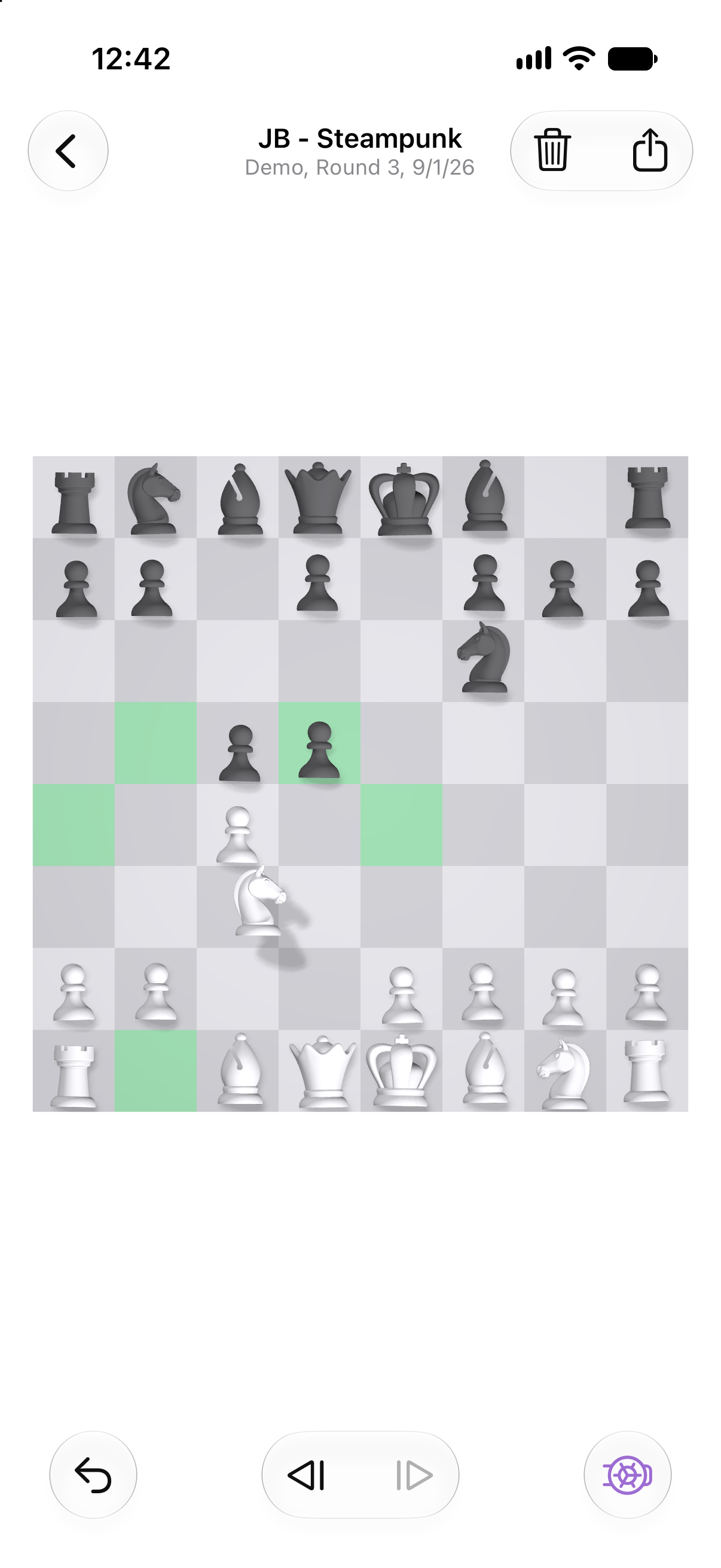
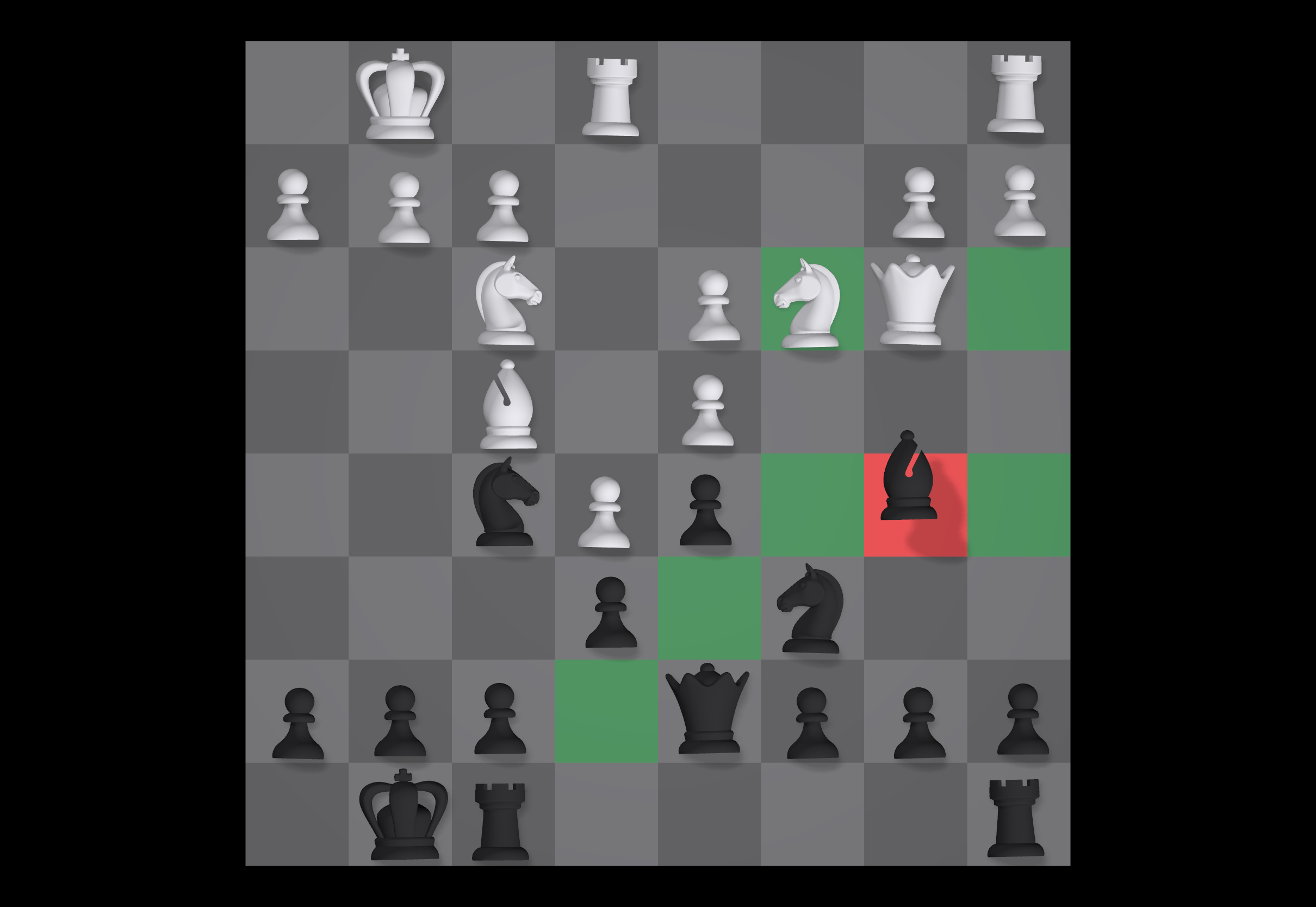
- Made for pointer and Pencil. Squares highlight as you hover with trackpad, mouse, or Apple Pencil, and while dragging, the square underneath tints green or red for legal and illegal drops.
- Speaks more languages. Now localized in German, Danish, and UK English.
Feature highlights
- A folding board, literally. On iPhone Duo in book pose, the board centers on the fold – the first phone that works like the folding board in your drawer. Close it, and the pieces slide into the fold. (S9, S10)
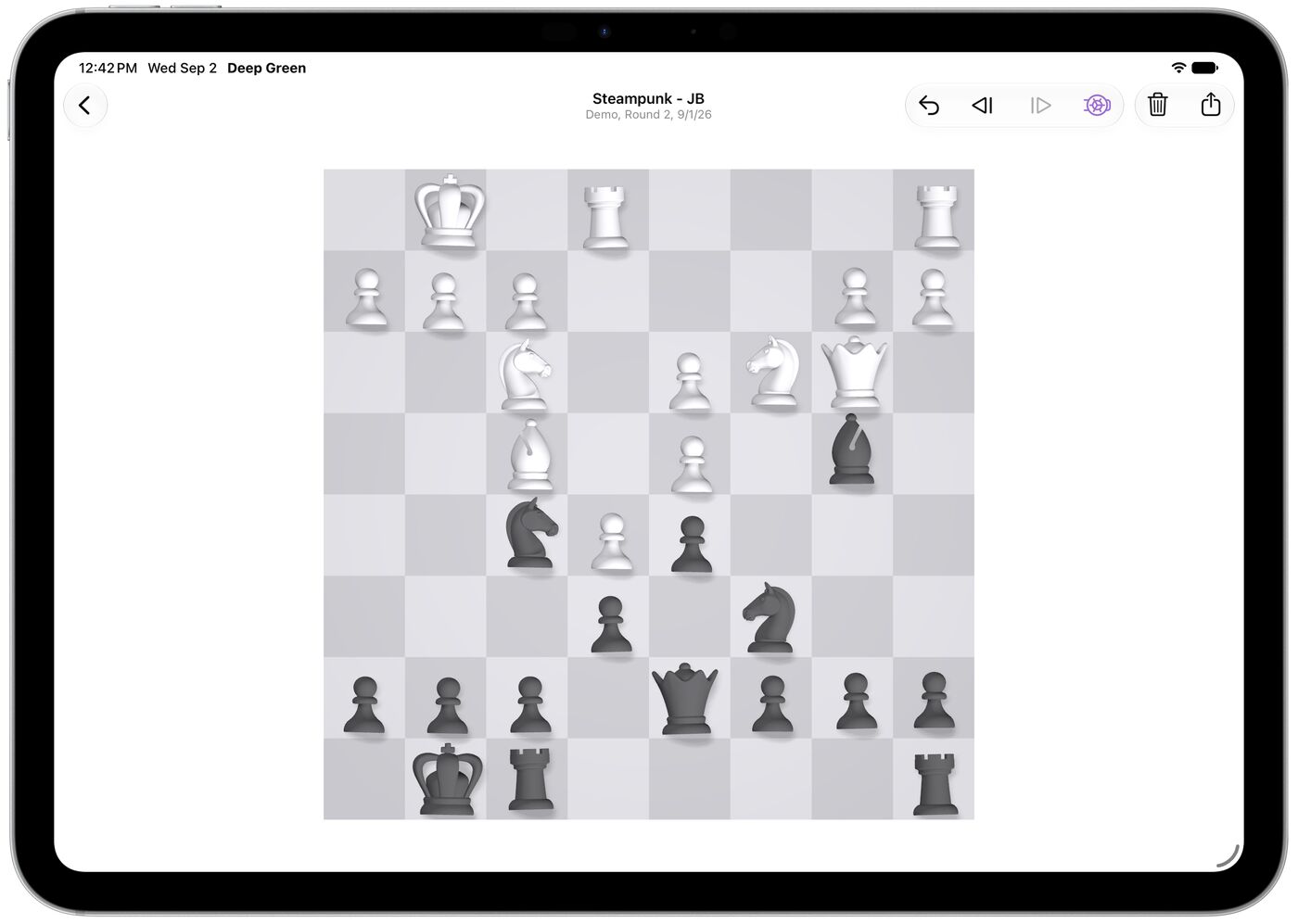
- A chess set of its own. Third-generation custom pieces, drawn for Deep Green and rendered in both clean 2D outline and high-resolution 3D. The set took the better part of two years to design; a chess set must respect a century of tacit conventions and still be beautiful. (S1)
- A board that feels physical. 3D rendering, fluid animations, and two-finger rotation. (S2)
- An engine you can actually beat. Adjust Steampunk’s depth and concentration to your level – no ELO tables, no cryptic settings. (S6)
- Open formats everywhere. Share, copy, import, and export games as PGN and positions as FEN – even preview them in the Files app. (S5)
- At home on iPad. Menu bar, multiple windows, keyboard, trackpad, and Apple Pencil support. (S4)
- Every game keeps its story. All games are saved with full history; step through moves, take moves back, or explore variations. (S3)
Screenshots and video
All iPhone and iPad screenshots are provided as clean PNG files without device frames; the iPhone Duo shots come framed, since the fold is the point. The press kit download adds a larger set of iPhone and iPad shots, plus framed versions. Screenshots with localized UI are available separately: German, Danish, UK English. Click any image for the full-resolution PNG.
Logos and artwork
The Deep Green app icon in its light, dark, and tinted versions, provided as 1024 px PNG files. Click an icon for the full-resolution file.


Boilerplate
Preferred name: Deep Green (two words, both capitalized). Please do not use “DeepGreen” or “Deep Green Chess.”
Short description (about 40 words):
Deep Green is a no-nonsense chess app for iPhone and iPad: a clean, native interface, beautiful custom pieces, open PGN support, and an original engine born on the Apple Newton in 1998. Free, with no ads, tracking, or accounts.
Medium description (about 100 words):
Deep Green is a no-nonsense chess app for iPhone and iPad. It began on the Apple Newton in 1998, came to iPhone in 2008, and was rewritten from scratch in Swift in 2023. The interface is clean and fully native, with beautiful custom pieces rendered in both 2D and 3D. Games live in the open PGN format and can be shared, imported, and previewed right in the Files app. The original Steampunk engine is built to be enjoyable rather than merciless; lower its concentration, and it starts making human-like mistakes. Free, with no ads, no tracking, and no accounts.
Long description (about 300 words):
Deep Green is a chess app for iPhone and iPad with an unusually long history. It began in 1998 as a chess program for the Apple Newton. Ten days after developer Joachim Bondo gave the first public sneak peek at a Newton user group in San Francisco, Steve Jobs cancelled the entire Newton platform. Deep Green shipped anyway; at the time, there was exactly one other chess app for the Newton.
Ten years later, in December 2008 – five months after the App Store opened – Deep Green arrived on iPhone, where John Gruber of Daring Fireball covered its first three versions. After a quiet period following version 1.2.3 in 2016, the app returned in 2023 as version 2.0, rewritten from scratch in Swift.
Version 2.1 adopts Apple’s Liquid Glass design and makes the app a first-class iPad citizen, with its own menu bar, multiple synchronized windows, and full keyboard navigation. PGN and FEN chess files are now real documents: they can be imported from the Files app, dragged in, or AirDropped, and Quick Look previews show the actual position in Deep Green’s own board style. Version 2.1.2 adds support for iPhone Duo, where the board centers on the fold in book pose, like a folding chess board – and the pieces slide into the fold as you close it.
Through all of it, the philosophy has stayed the same. Deep Green is for people who want to sit down and play a thoughtful game of chess – not manage an account, watch ads, or fight a subscription. The interface is clean and native, with custom pieces rendered in 2D and 3D. The engine, Steampunk, was written for the original Newton version and is designed to be enjoyable rather than merciless: turn its concentration down and it starts making human-like mistakes, just as we do.
Deep Green is free, with no ads, no tracking, no analytics, and no in-app purchases.
About the developer
Joachim Bondo has developed software for Apple platforms since 1987 – from the classic Mac, over the Newton, to iPhone and iPad. Deep Green is his passion project, built and maintained in his spare time.
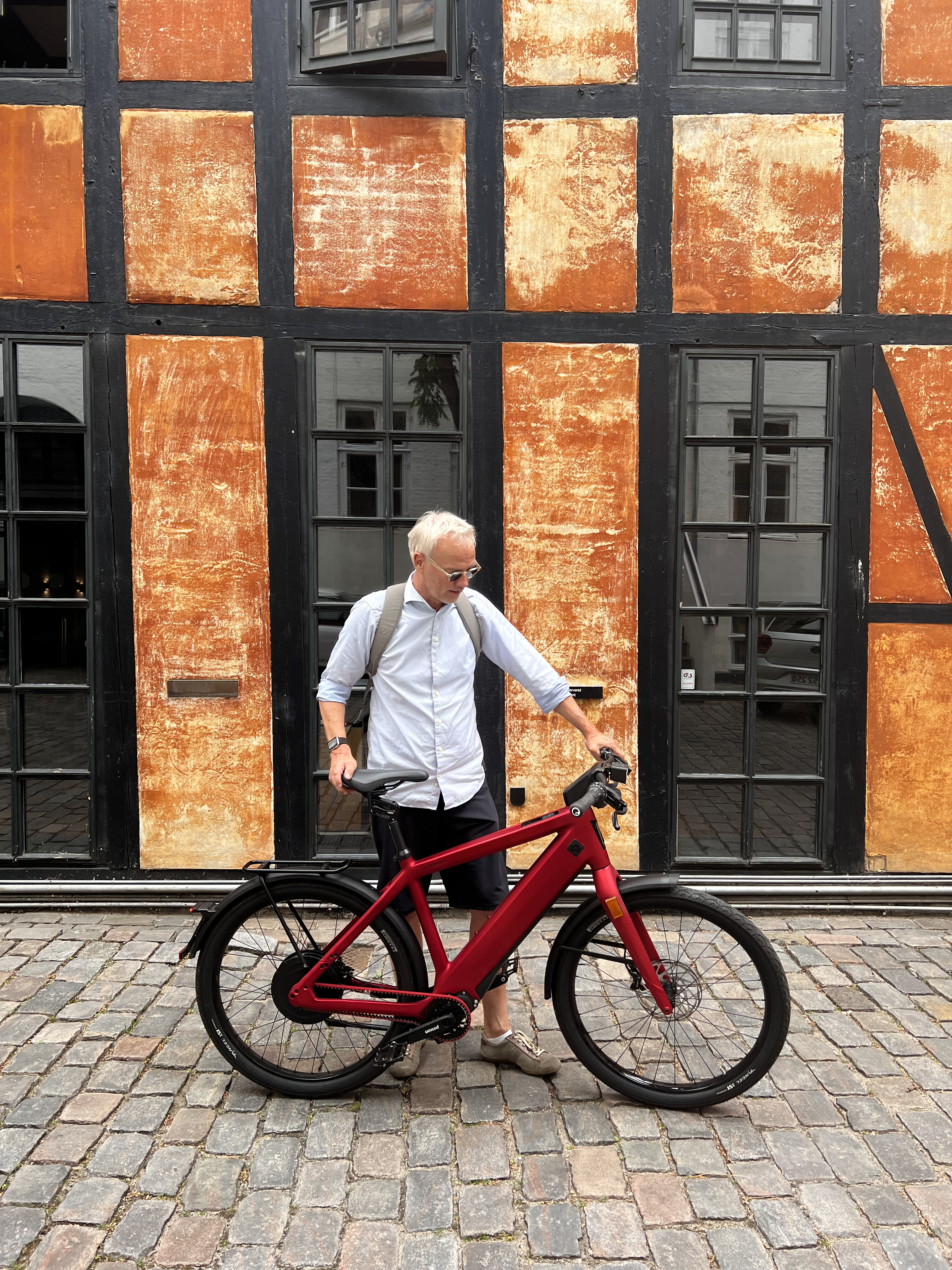
By day, Joachim is the CEO of Shortcut (shortcut.io), a 40-plus-person agency in Nyhavn, Copenhagen, that designs, develops, and maintains mobile apps for iOS and Android. Together with its sister companies in Scandinavia, Romania, and Malaysia, Shortcut has released more than 1,000 apps since 2008. Joachim lives half an hour north of Copenhagen, and six months a year he rides his speed pedelec 80 kilometers a day, to the office and back.

Quotes
“I wanted a chess app that feels like an Apple app first, and a chess app second.”
– Joachim Bondo
“When I released Deep Green for the Newton in 1998 – five years after the platform was introduced – there was exactly one other chess app available. When I released it for iPhone in December 2008, five months after the App Store opened, I counted more than 240.”
– Joachim Bondo
“The first phone shaped like a folding chess board deserved to behave like one. Close it, and the pieces slide into the fold.”
– Joachim Bondo
Press coverage
Deep Green’s first three versions were covered by John Gruber on Daring Fireball:
More Recently
FAQ
Why is there no online play? I have always wanted Deep Green to be simple – something you play on the train or in a café. Just you and the machine. That said, the world has changed since 1998, and in the next feature release you will be able to play against family and friends. Plus a little surprise.
Why is it free? Deep Green is a passion project. I am a solo developer working on it in my spare time, and I would rather see the app in as many hands as possible than earn a few extra dollars. (It was a paid app for many years.)
Will there be a Mac version? As Apple’s frameworks become more unified, a Mac version gets more and more likely. But iPhone and iPad will always come first.
Contact
- Joachim Bondo
- Email: press@deepgreen.app
- Website: deepgreen.app
- Mastodon: @deepgreen@indieapps.space